
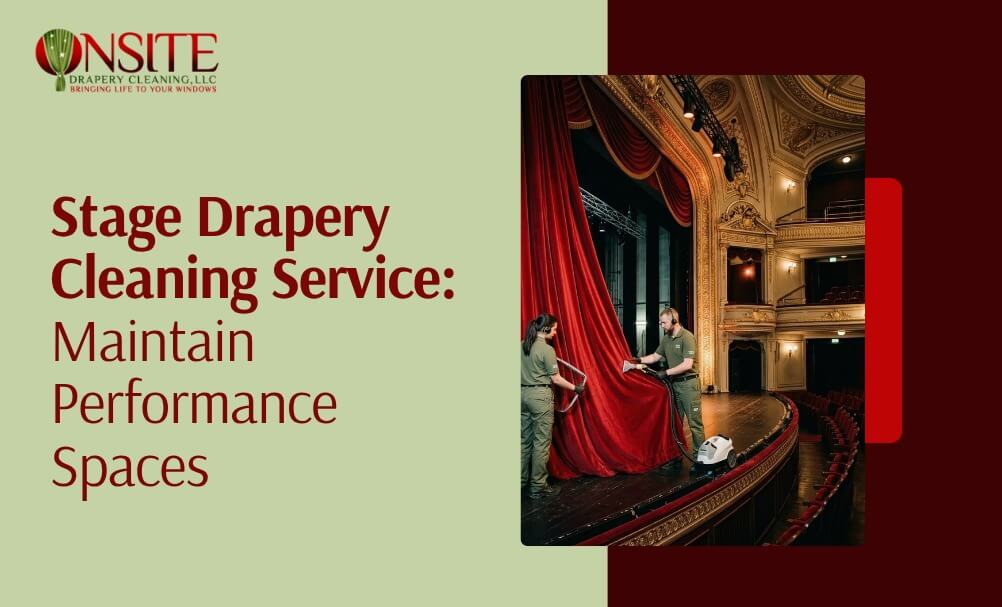
Stage curtains are some of the most hardworking fabrics in any building. Night after night, they open and close, absorbing dust, smoke residue, odors, and the general wear that comes with constant use. For theaters, schools, churches, auditoriums, and event venues, these curtains are expensive assets, and replacing them prematurely is a cost no facility manager wants to face.
That’s where a professional stage drapery cleaning service comes in. Regular stage curtain cleaning keeps theatrical fabrics looking sharp, smelling fresh, and performing safely for years.
This guide covers everything you need to know about maintaining stage draperies: which venues need professional cleaning, how process works, how often it should happen, and what you can do between cleanings to protect your investment.
What Is a Stage Drapery Cleaning Service?
A stage drapery cleaning service is a specialized form of fabric care designed for the unique demands of theatrical and performance environments. Unlike standard curtain cleaning, theater drapery cleaning accounts for the scale, weight, and material complexity of stage curtains including velvet main drapes, fabric legs, borders, scrims, and heavy backdrops.
Theatrical drapery cleaning needs expertise in handling large-scale fabrics without causing shrinkage, color fading, or structural damage. Many stage curtains are treated with fire-retardant coatings, need special dry-cleaning methods, or are constructed from delicate materials that react poorly to conventional washing.
Depending on the venue and the curtain system, professional cleaning can be performed onsite, right where the curtains hang, minimizing disruption to rehearsal and performance schedules.
Performance Spaces That Need Professional Curtain Cleaning
Venue curtain cleaning is not limited to Broadway-level theaters. A wide range of facilities rely on stage draperies as part of their daily operations, and all of them benefit from regular professional maintenance:
- Theaters — Both professional and community theaters host frequent productions, while exposing curtains to stage lighting heat, fog machine residue, and heavy foot traffic
- School and university auditoriums — High-use environments where curtains accumulate dust and allergens
- Houses of worship — Churches and synagogues often use stage or platform draperies for events, performances, and services
- Performing arts centers — Facilities hosting multiple productions across different genres face diverse contamination challenges
- Community centers — Multi-purpose spaces where curtains serve both performance and event functions
- Hotels and ballrooms — Decorative stage drapes in banquet rooms require cleaning to maintain a polished appearance for guests
- Event venues — Frequently dressed and undressed stage areas accumulate grime faster than static installations
- Senior centers and recreational facilities — Older or more delicate fabrics may need more careful, specialized attention
Each of these environments presents its own cleaning challenges, which is why working with a provider that understands the full range of commercial stage curtain cleaning needs matters.
Why Regular Stage Curtain Cleaning Matters
Skipping routine cleaning has real consequences, both for the curtains themselves and for the people in the space.
From a fabric preservation standpoint, dust and particulate matter act as abrasives. Every time a curtain moves, embedded grit works against the fibers, causing premature wear. Smoke residue and moisture accelerate this process further. A Stage Drapery Cleaning Service removes these contaminants before they cause lasting damage, directly extending the lifespan of expensive theatrical fabrics.
There are also health and safety considerations. According to OSHA, indoor air quality is recognized workplace safety concern. Stage curtains especially those in heavily used performance spaces can harbor dust, allergens, mold spores, and bacteria. Performers, stagehands, and audience members all share this environment. Clean curtains contribute to a healthier, safer space for everyone.
Beyond health and longevity, appearance matters. A clean, well-maintained curtain set communicates professionalism and respect for the space.
Common Problems Found in Stage Curtains
Understanding what accumulates in stage fabric helps explain why professional stage fabric cleaning is necessary rather than optional.
Dust buildup is the most universal problem. Stage environments especially those with wooden floors, rigging systems, and high foot traffi generate significant airborne particulate matter that settles into heavy curtain fabrics.
Smoke and haze leftover from theatrical fog machines, haze effects, and pyrotechnics bonds to fabric fibers over time, it leaves a persistent odor and dull appearance that standard vacuuming can’t look for.
Stains from makeup, food and beverage spills during events, and contact with painted scenery are common in multi-use venues.
Odors develop from moisture absorption, biological contamination, and the accumulation of all of the above. Once embedded in thick velvet or wool fabric, odors are difficult to eliminate without professional treatment.
Over time, dirt and dust can do more than make curtains look dull. As these particles settle into the fabric, they increase friction in areas that experience the most movement, such as hems, edges, and around the grommets.
Moisture is another issue to watch for. Keeping curtains clean, dry, and ventilated helps preserve both their appearance and the condition of the fabric.
Fire-Retardant Curtains and Proper Maintenance
Many stage curtains are treated to meet fire safety requirements, and keeping those safety features intact is just as important as keeping the fabric clean. In many venues, fire-retardant curtains must continue to comply with local regulations and manufacturer suggestions throughout their service life.
Fire-retardant stage curtains require a different approach to cleaning. Using the wrong products or cleaning methods can affect the protective treatment applied to the fabric and may reduce its ability to meet required safety standards.
Professionals who specialize in stage curtain cleaning understand how to care for these fabrics properly. They follow manufacturer’s cleaning recommendations, use methods that help preserve the curtain’s protective treatment, and may let you know when curtains should be inspected or re-treated to maintain fire-retardant performance.
How Professional Stage Drapery Cleaning Works
A quality commercial stage curtain cleaning service follows a structured process that balances thoroughness with fabric safety.
Initial Inspection
Before any cleaning begins, a professional technician examines each curtain for existing damage, staining patterns, fabric type, and the condition of hardware attachments, grommets, and rigging connections. This step determines the appropriate cleaning approach for each piece.
Fabric Assessment
Not all stage curtains are the same. Velvet, wool, polyester blends, and specialty theatrical fabrics each respond differently to cleaning agents and methods. A proper assessment ensures that the cleaning process protects rather than damages the material.
Spot Treatment
Localized stains from makeup, paint, spills, or biological contamination receive targeted pre-treatment before the main cleaning process. This step improves overall results and reduces the risk of spreading staining during the cleaning process.
Safe Cleaning Process
Specialized cleaning products that are safe for theatrical fabrics help remove dirt and buildup while protecting the condition of the curtains. When the right methods are used, the fabric is very less likely to shrink, fade, or lose protective qualities of its fire-retardant treatment.
For onsite cleaning, curtains are cleaned while they remain in place. This eliminates the need to take them down and transport them elsewhere, reducing downtime and avoiding any risk of damage during removal, handling, or reinstallation.
Drying and Final Inspection
After cleaning, steam finishing removes wrinkles and restores the curtain’s hang and drape. A final inspection confirms that stains have been addressed, fabric integrity is maintained, and the curtain is ready for use.
How Often Should Stage Curtains Be Cleaned?
Professional curtain maintenance frequency depends on how heavily a space is used and what kinds of activities take place in it.
For most performance venues, annual cleaning represents a reasonable baseline. High-use venues those hosting multiple productions per month or year-round programming, may benefit from cleaning every six months. Similarly, venues that use fog or haze machines frequently should schedule cleaning more often, as residue from these effects accumulates quickly.
Planning curtain cleaning around the performance calendar works well for schools, theaters, and community venues. Scheduling a cleaning before a new season starts helps ensure the curtains look their best for audiences, while other cleaning after the season removes the dust and buildup that accumulate during frequent use.
It’s also a good idea to clean curtains after productions that involve heavy stage effects, such as smoke or fog, or after events where food and drinks are served near the performance area.
Tips for Protecting Stage Draperies Between Cleanings
Scheduled professional cleaning works best when combined with consistent care between visits. Performance curtain cleaning has a longer-lasting effect when curtains are well-maintained.
- Conduct routine visual inspections — Check curtains monthly for visible staining, new damage, or developing odors. Early detection allows for prompt spot treatment before problems spread.
- Vacuum regularly — A gentle, low-suction vacuum with a soft brush attachment can remove surface dust buildup from curtains without damaging fibers. This is especially useful in high-traffic venues.
- Control moisture — Ensure backstage areas are adequately ventilated. Storing curtains in damp or humid conditions accelerates mold and mildew development.
- Limit unnecessary contact — Train stage crew to handle curtains with clean hands and to avoid storing materials against or on top of draperies.
- Address spills immediately — Blot (do not rub) any spills as soon as they occur to secure staining from setting.
- Schedule professional maintenance proactively — Don’t wait for visible problems to book a cleaning. A proactive schedule, like the one described at our stage drapery cleaning service page, keeps curtains in peak condition year-round.
For venues that need broader fabric care across multiple spaces, our commercial drapery cleaning services and commercial upholstery cleaning can be scheduled alongside stage curtain maintenance. Healthcare and institutional venues may also benefit from our privacy curtain cleaning services for other areas of their facility.
Related Commercial Curtain Care Resources
For more detailed guidance on fabric care across different commercial environments, these resources provide useful context:
- Our commercial drapery cleaning guide covers best practices for maintaining curtains across offices, restaurants, schools, and event spaces.
- The Winter Garden Theatre NYC guide takes a closer look at how professional venues approach long-term drapery maintenance in a demanding performance environment.
Frequently Asked Questions
How often should stage curtains be professionally cleaned?
Most performance venues benefit from professional stage curtain cleaning at least once a year. High-use theaters, schools with active performance seasons, and venues that use fog or haze effects may need cleaning every six months. After major productions or events, a post-run cleaning helps prevent staining and odors from setting permanently into the stage fabric.
Can large theater curtains be cleaned onsite?
Yes. Professional stage drapery cleaning services like Onsite Drapery Cleaning, LLC are specifically designed to clean curtains in place, no removal required. Onsite theatrical drapery cleaning eliminates the logistical risk of transporting heavy, delicate fabrics and minimizes disruption to rehearsal and performance schedules.
Is professional cleaning safe for fire-retardant curtains?
Professional venue curtain cleaning that specializes in theatrical fabrics uses methods appropriate for fire-treated materials. Improper cleaning can degrade fire-retardant coatings and affect compliance with NFPA safety standards. Always choose a provider experienced in fire-retardant curtain cleaning and familiar with manufacturer care requirements.
What types of venues need stage drapery cleaning?
Any facility with theatrical or performance draperies benefits from regular professional maintenance. This includes theaters, school auditoriums, churches, performing arts centers, community halls, hotels, banquet venues, and event spaces. Both high-use performance venues and occasional-use community spaces accumulate dust, odors, and fabric wear over time.
How can regular cleaning extend the life of stage curtains?
Dust, smoke residue, and moisture act as abrasives that break down fabric fibers with every movement. Regular performance curtain cleaning removes these contaminants before they cause irreversible damage. Clean curtains also hang better, look more professional, and are less likely to develop mold or mildew, all factors that directly extend the usable life of expensive theatrical draperies.
The Bottom Line
Stage curtains are a valuable part of any performance venue, and regular maintenance helps keep them looking their best while extending their lifespan.
With more than 15 years of experience, Onsite Drapery Cleaning, LLC provides stage curtain cleaning services for schools, theaters, churches, hotels, and event venues throughout the New York City area. Their team uses eco-friendly cleaning methods designed to protect theatrical fabrics while working around each venue’s schedule to minimize disruption.
Whether you manage a school auditorium, community theater, house of worship, or performance venue, routine curtain maintenance may help keep your space clean, professional, and ready for every audience. Contact Onsite Drapery Cleaning, LLC to discuss your curtain cleaning needs and create a maintenance schedule that works for your venue.
Get Your Free Book Today!

Join Our Newsletter - Get Free Gift
Join our community and never miss a beat!