
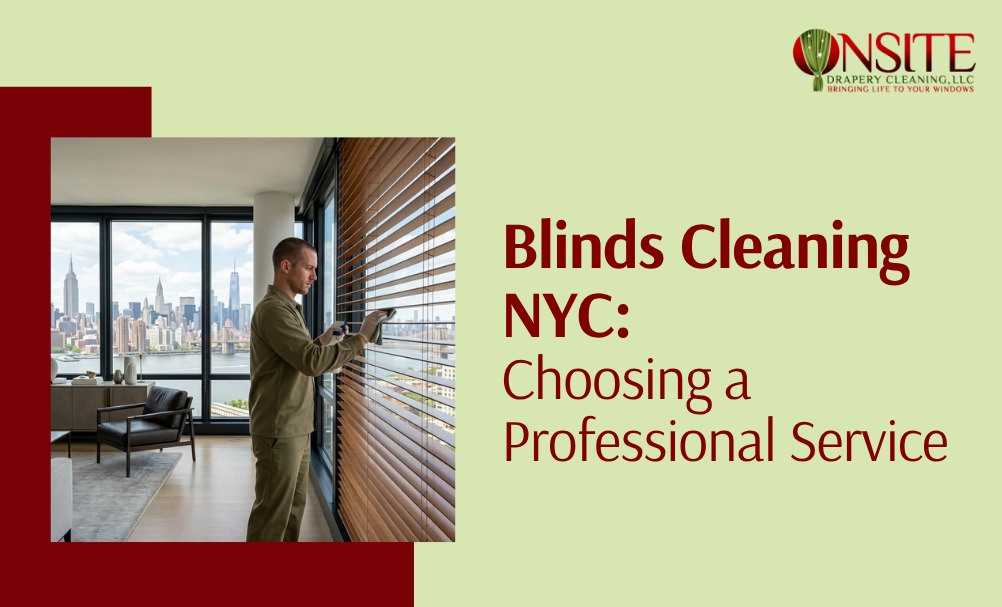
Blinds are used every day, but they are easy to forget when cleaning your home. You open them to let in sunlight and close them when you need privacy. During the day, dust, dirt, and other small particles can slowly collect on the slats, cords, and edges. After some time, this buildup can make your blinds look dull and dirty.
This can be a bigger problem for homes and apartments in New York City. Open windows may allow street dust to enter your home. Nearby construction can also create fine dust. Cooking can leave residue on window treatments, especially in smaller apartments. Pet hair and regular handling can add even more buildup.
Cleaning blinds may seem easy, but every material needs different care. Wood, faux wood, fabric, aluminum, and vinyl blinds should not always be cleaned in the same way. Too much water, strong products, or rough cleaning may damage the finish, bend slats, or leave marks.
Professional blinds cleaning NYC services can make the process easier. An experienced cleaner can first check the material and condition before choosing a suitable method. This guide explains professional blind cleaning and what to look for when choosing a trusted service in NYC.
What Does Professional Blinds Cleaning Include?
Professional blinds cleaning is more than a quick wipe-down. A thorough service typically follows a careful sequence:
- Inspecting the blinds for material type, age, and overall condition
- Identifying the material — wood, faux wood, fabric, aluminum, vinyl, or a specialty treatment
- Checking for stains, damage, and existing wear
- Examining cords, slats, and operating parts for any issues
- Selecting the appropriate cleaning method based on the blind’s specific material and condition
- Protecting nearby surfaces, including floors, walls, and furniture
- Removing dust and buildup carefully and thoroughly
- Treating suitable spots where staining or residue is present
- Cleaning the blind using the selected method
- Completing a final inspection to confirm the treatment is thorough and complete
The most important principle in professional window blinds cleaning is this: one cleaning process should not automatically be used for every blind. Material matters. Condition matters. A provider who skips the inspection step and jumps straight to cleaning is one worth reconsidering.
Why NYC Blinds Need Regular Professional Care
Living in New York City puts window treatments through more than the average home environment. Here’s what contributes to faster buildup in NYC apartments and residences:
Street Dust and Open Windows
Busy streets generate constant foot traffic, vehicles, and activity. Open windows common during warmer months allow street-level dust and particles to settle on blinds throughout the day.
Construction Dust
NYC is always under construction somewhere. Renovation projects in neighboring buildings, or work happening on the street below, can send fine construction dust into apartments and onto window treatments.
Cooking Residue
In many NYC apartments, kitchens and living areas share compact spaces. Cooking residue grease particles and steam can drift toward nearby window treatments, where it bonds with dust and becomes harder to remove.
Everyday Touching
Cords are pulled, wands are twisted, slats are adjusted. Frequent handling transfers oils and dirt from hands to the surface of the blind, particularly along edges and lower sections.
Pets
For pet owners, hair and everyday pet-related debris can collect around the lower portions of blinds especially those close to the floor or near furniture where pets rest.
None of these factors alone demands immediate professional attention, but together they explain why NYC window treatments tend to need care more regularly than those in quieter environments.
What Types of Blinds Can Be Professionally Cleaned?
Not all blinds are cleaned the same way. Understanding how each type is handled helps you know what to expect and what questions to ask.
Venetian Blinds
Venetian blinds feature horizontal slats that collect dust on both the top and underside of each slat. Corners, edges, and cords are particularly difficult to clean thoroughly without the right approach. The gaps between slats can trap buildup that a simple cloth won’t reach. A professional cleaner will address each slat individually and pay attention to the cord and tilt mechanism.
Faux Wood Blinds
Faux wood blinds are made from composite materials typically PVC or a wood-polymer blend designed to mimic the look of real wood. While they’re generally more moisture-tolerant than natural wood, the cleaning method should still account for the blind’s finish, construction, and the manufacturer’s care instructions. Assuming all faux wood blinds are identical is a common mistake.
Wood Blinds
Real wood blinds require careful handling. Excess moisture can warp slats, raise the grain, or damage the finish. A professional cleaner will use minimal moisture and ensure the wood is dried properly. Cleaning products also need to be selected with the wood’s finish in mind.
Vertical Blinds
Vertical blinds consist of individual vanes that hang from a track at the top. Each vane needs to be cleaned separately, and the track itself requires attention. Vertical vanes made of fabric need a different approach than those made from synthetic or vinyl materials, and careful handling during cleaning prevents bending or distortion.
Fabric Blinds
Fabric blinds require a distinctly different approach than hard-slat blinds. Fabric can absorb stains, trap dust within its fibers, and react unpredictably to moisture or cleaning products. The fiber type, backing material, and any existing stains all factor into how the blind should be cleaned. Aggressive scrubbing or the wrong product can cause fabric distortion, discoloration, or damage to the backing.
Aluminum and Vinyl Blinds
These are among the more common and straightforward blind types to maintain. Dust, fingerprints, and everyday residue are the primary concerns. Even so, thin aluminum slats can bend easily under pressure, and some cleaning products may affect the surface finish over time.
Blinds Cleaning by Material: A Quick Reference
| Blind Material | Common Problem | Main Cleaning Concern |
|---|---|---|
| Wood | Dust and marks | Excess moisture |
| Faux wood | Dust and buildup | Finish and construction |
| Fabric | Dust and stains | Fabric sensitivity |
| Aluminum | Dust and fingerprints | Bending slats |
| Vinyl | Dust and residue | Surface condition |
| Vertical fabric | Dust and spots | Shape and fabric care |
Always follow the manufacturer’s care instructions when they are available. The exact cleaning process can vary significantly between products, even within the same material category.
DIY vs. Professional Blinds Cleaning: Which Is Right for You?
Light dusting at home is perfectly reasonable for many blind types especially when manufacturer instructions support it and the buildup hasn’t progressed too far. But knowing when to call a professional can save your blinds from damage.
| Factor | DIY Cleaning | Professional Cleaning |
|---|---|---|
| Material inspection | Often limited | Completed first |
| Equipment | Household tools | Professional tools |
| Cleaning method | General | Material-specific |
| Difficult stains | May be challenging | Professionally evaluated |
| Delicate materials | Greater care needed | Specialist experience |
| Time | Homeowner handles it | Service is handled for you |
| Large treatments | Can be difficult | Professional assistance |
Professional window blinds cleaning becomes more valuable when you’re dealing with:
- Heavy buildup that routine dusting hasn’t addressed
- Stains that require targeted treatment
- Delicate or expensive materials
- Large windows or hard-to-reach installations
- Blinds with an uncertain material or finish
- Multiple windows across a large home
Common Blinds Cleaning Mistakes to Avoid
Many blind owners cause unintentional damage by using the wrong cleaning approach. These are the most common mistakes—and the risks they carry:
- Using too much water — can warp wood, leave water marks on fabric, and damage finishes
- Scrubbing aggressively — can scratch surfaces, bend thin slats, or distort fabric fibers
- Applying the same cleaner to every material — what works on vinyl may damage fabric or wood
- Soaking wood blinds — moisture absorption can cause permanent warping
- Pulling on cords — creates uneven tension and can damage the operating mechanism
- Applying stain remover without testing — some products react poorly with certain dyes or fabrics
- Ignoring manufacturer instructions — these exist for a reason and should always be checked first
The consequences of these mistakes can include discoloration, water marks, bent slats, damaged finishes, and fabric distortion. In some cases, the damage is permanent.
How Professional Blinds Cleaning Works: Step by Step
A professional blind cleaning company follows a structured process designed around the specific blind being cleaned—not a one-size-fits-all routine.
Step 1: Inspect
The cleaner examines the blind type, material, operating system, and overall condition before doing anything else.
Step 2: Identify Problem Areas
Heavy dust zones, stains, fingerprints, grease spots, and other buildup are noted. This guides how cleaning effort is distributed.
Step 3: Choose the Cleaning Method
Based on the inspection, the cleaner selects an approach suited to the material. This is where professional expertise matters most.
Step 4: Protect the Room
Nearby floors, furniture, walls, and window areas are protected where necessary, especially when moisture or cleaning products are involved.
Step 5: Clean
Buildup is carefully removed and appropriate spots are treated. The pace and technique vary based on the material and condition.
Step 6: Dry
Where moisture has been used, the blind is allowed to dry correctly before the process is considered complete. This step is especially important for fabric and wood blinds.
Step 7: Inspect Again
A final check confirms the treatment is thorough, and any permanent staining or pre-existing damage is noted for the client’s awareness.
What About Ultrasonic Blind Cleaning?
Ultrasonic blind cleaning uses high-frequency sound waves transmitted through water to dislodge dust and residue from blind surfaces. It can be highly effective for certain blind types particularly hard-slat blinds made from vinyl, aluminum, or faux wood.
However, ultrasonic cleaning is not automatically appropriate for every blind. Before recommending this method, a professional should consider:
- The blind’s material and construction
- Any existing damage or fragile components
- Hardware and operating parts that may not tolerate submersion
- Manufacturer guidance on approved cleaning methods
Fabric blinds, delicate finishes, and certain wood treatments may not be suitable candidates. The decision should always follow a proper inspection rather than being offered as a default service for all blind types.
Can Blinds Be Professionally Cleaned Without Taking Them Down?
For many NYC residents, removing blinds is inconvenient especially in high-rise apartments, rooms with large windows, or spaces where reinstallation is difficult. Onsite cleaning can offer a practical alternative.
Some window blinds can be cleaned while still installed, depending on:
- The blind’s material and construction
- The type and level of buildup
- The cleaning method selected
- Whether the operating hardware allows safe access
Potential benefits of onsite cleaning include less handling, no transportation risk, no reinstallation, and less disruption to your space. That said, onsite service isn’t suitable for every blind or every cleaning situation. A professional should evaluate the blind first and determine what’s both safe and practical before committing to an approach.
How Often Should NYC Homeowners Clean Their Blinds?
There’s no single schedule that works for everyone. Cleaning frequency depends on several variables:
- How often windows are open and the level of street exposure
- Whether nearby construction is ongoing
- The presence of pets in the home
- Cooking habits and kitchen proximity
- Room use and foot traffic
- The blind’s material and color
- Manufacturer recommendations
As a general habit, routine light dusting can help slow the buildup between deeper cleanings provided the blind’s material allows for it. Professional cleaning becomes worth considering when routine maintenance is no longer keeping up, or when staining and heavier buildup has developed.
For a broader look at how to clean blinds and shades at home between professional services, that guide covers the basics in more detail.
10 Questions to Ask a Blinds Cleaning Company Before Hiring
Choosing the right local blinds cleaning service comes down to asking the right questions. A professional cleaner should be able to answer all of these clearly:
- How much experience do you have cleaning blinds?
- Have you cleaned this specific type of blind before?
- Do you inspect the blinds before deciding on a cleaning method?
- What cleaning method will you use, and why is it appropriate for my blinds?
- Can my blinds be cleaned while still installed?
- Do you clean fabric blinds?
- Do you work with wood and faux wood blinds?
- How do you handle stains—and what results are realistic?
- Is your business properly insured?
- What exactly is included in the estimate?
Pay close attention to how a company answers question four. A professional blind cleaner should be able to explain why a particular method is suitable for your specific blinds not simply state “this is how we clean every blind.”
Red Flags When Choosing a Blinds Cleaning Service
Not every company that offers blind cleaning services has the experience to back it up. Watch for these warning signs:
- No inspection before cleaning begins
- No questions asked about the blind’s material or condition
- The same method promised for every type of blind, regardless of material
- Unrealistic stain-removal guarantees — some stains are permanent
- No clear pricing or vague estimates
- No insurance — this matters if something goes wrong
- No explanation of how or why a cleaning process was chosen
- No experience with your specific blind type
- No concern about existing damage or wear
The takeaway: choose a company that understands your blinds not simply the one offering the lowest price. A lower quote is no bargain if the cleaning process damages a treatment you paid good money for.
A note on cord safety: If you have older corded blinds and young children at home, a professional inspection is also a good opportunity to check cord condition and accessibility. The Window Covering Safety Council notes that corded window coverings are considered one of the top hidden hazards in American homes for young children something worth being aware of when blinds are being handled or replaced.
Blinds Cleaning NYC: Apartments and High-Rise Homes
NYC apartments present unique challenges that suburban homes don’t. Tight spaces, large windows in high-rise units, building access requirements, and the constant exposure to street-level dust and construction all affect how window treatment cleaning needs to be approached.
For residents in condos, co-ops, and high-rise apartments across the city, the practical concerns are real:
- Large windows that are difficult to clean without professional equipment
- Blinds installed at height that are hard to remove safely
- Limited indoor space that makes blind removal and reinstallation awkward
- Building access requirements that affect scheduling
- Busy schedules that make DIY cleaning impractical
Professional window treatment cleaning NYC services that offer onsite care can simplify the process significantly. Rather than removing and transporting blinds, a skilled cleaner can assess what’s possible in your space and handle the work on-site where suitable.
Residential window treatment cleaning services are specifically designed to address these kinds of practical constraints an important consideration for NYC homeowners and renters alike.
Blinds Cleaning for NYC Businesses
Professional window treatment care isn’t only relevant for homes. NYC offices, hotels, restaurants, retail spaces, medical offices, and waiting rooms all use blinds and window treatments that see heavy daily use.
Business environments present their own challenges: more frequent handling, higher foot traffic, and treatments that may be overlooked during routine cleaning. A professional blind cleaning company can help businesses maintain a well-cared-for appearance without disrupting normal operations.
This section is intentionally brief the primary focus of this guide is residential. But if you manage a commercial space and want to explore options, the same principles apply: inspect first, choose a method based on the material, and look for a provider with genuine experience.
How to Choose the Best Blinds Cleaning Service in NYC
Now that you know what to look for and what questions to ask, here’s a straightforward summary of what to prioritize when selecting a blind cleaning company in NYC:
- Experience: Does the company specialize in window treatments, or is blind cleaning a sideline?
- Material knowledge: Can the team handle wood, faux wood, fabric, aluminum, vertical, and specialty treatments?
- Inspection: Will someone evaluate your blinds before choosing a cleaning method?
- Cleaning options: Is the process matched to the material, not applied uniformly?
- Onsite service: Can suitable blinds be cleaned at your property?
- Insurance: Is the business properly covered?
- Reviews: What do real clients say about the quality of the work?
- Project experience: Can the company point to genuine experience with your type of blind?
- Communication: Can the cleaner explain what results are realistic before starting?
- Pricing: Is the estimate clear, itemized, and transparent?
Why Choose Onsite Drapery Cleaning for Blinds Cleaning in NYC?
Onsite Drapery Cleaning, LLC brings more than 15 years of hands-on experience to professional window treatment care in New York City and surrounding areas. The team works with residential and commercial clients across a wide range of blind types—including wood, faux wood, fabric, aluminum, vertical, and specialty treatments.
Every service begins with a proper inspection. Cleaning methods are selected based on the blind’s material and condition, not applied as a blanket approach. For suitable blinds, onsite cleaning is available reducing handling, avoiding transportation risk, and minimizing disruption to your home or office.
If you’re looking for professional blinds cleaning services from a team with real experience in NYC window treatment care, Onsite Drapery Cleaning is worth your call. The same qualities this guide recommends looking for in a provider are the ones the company is built around.
Choose Experience for Your NYC Blinds
Choosing a blinds cleaning NYC service should not be based on price alone. Every type of blind needs the right care. Wood, faux wood, fabric, vinyl, and aluminum can react differently to water, cleaning products, and pressure. Using the wrong method may leave marks or affect the finish and shape of your blinds.
Before hiring a company, look at its experience and knowledge of different blind materials. A professional should inspect your blinds first and explain the cleaning method before starting the work. This helps you understand how your window treatments will be cared for.
Over 15 years of experience in the NYC area. Onsite Drapery Cleaning, LLC does hands-on cleaning for homes and businesses. We check each blind and determine the best cleaning method considering the material and the blind’s condition.
Ready to give your blinds professional care? Request your professional cleaning estimate today
Frequently Asked Questions
How do professionals clean window blinds?
Professional blind cleaning starts with an inspection of the material, condition, and type of buildup present. The cleaner then selects a method suited to that specific blind. Wood, faux wood, fabric, aluminum, and vinyl materials each require different care, so a thorough inspection must come before any cleaning begins.
Is professional blinds cleaning worth it?
Professional cleaning is particularly useful when blinds have heavy dust, stains, difficult buildup, or delicate materials that require careful handling. It also makes sense when you have many windows or treatments that are difficult to remove safely. A professional evaluates the blind first and selects a process based on its specific material and condition.
Can wood blinds be professionally cleaned?
Yes, many wood blinds can be professionally cleaned, but moisture and cleaning products must be carefully controlled to avoid warping or finish damage. The cleaner should inspect the wood type, finish, and condition along with any manufacturer care instructions before selecting a method. Wood blinds should not be treated the same as vinyl or aluminum.
Can fabric blinds be professionally cleaned?
Many fabric blinds can be professionally cleaned, but the correct method depends on the fiber type, construction, backing, and the nature of any staining present. Because fabric can reactAn error occurred during generation. Please try again or contact support if it continues.
Get Your Free Book Today!

Join Our Newsletter - Get Free Gift
Join our community and never miss a beat!