
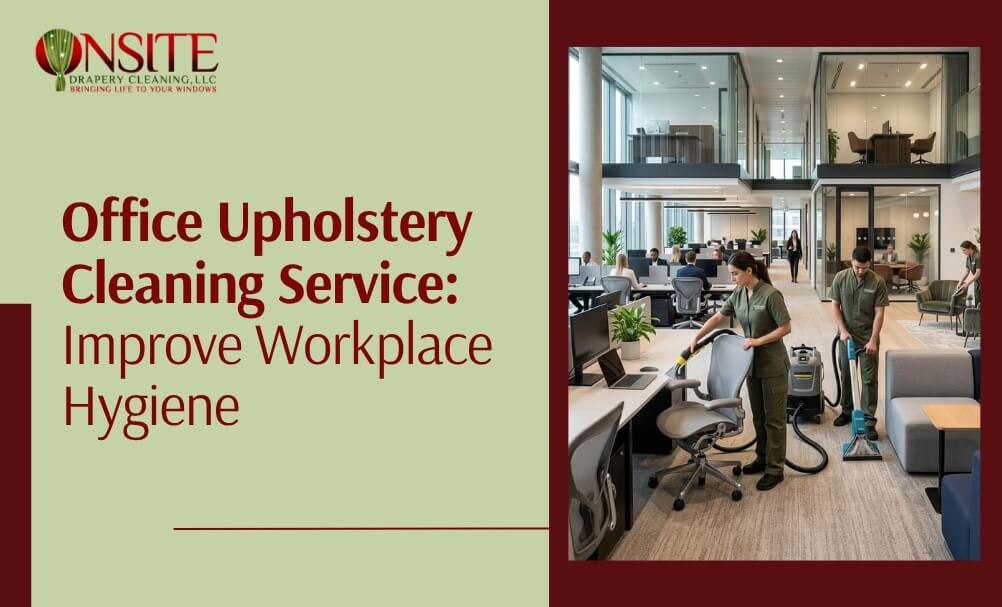
Every chair in your office tells a story. Conference room seats endure back-to-back meetings. Reception sofas greet clients day after day. Break room cushions absorb spills, crumbs, and daily wear.
A professional office upholstery cleaning service does more than refresh the look of your furniture. It removes the contaminants that accumulate inside fabric fibers, creating a cleaner, healthier environment for everyone who walks through your doors. Whether you manage a law firm, a medical office, or a busy coworking space, routine office upholstery cleaning protects your investment, supports employee well-being, and signals to clients that your business takes professionalism seriously.
This blog covers everything you need to know what the service includes, which furniture benefits most, how the process works, and how often to schedule it.
What Is an Office Upholstery Cleaning Service?
A commercial upholstery cleaning service is a professional cleaning solution made for fabric-covered furniture in business world. Unlike basic surface wiping, it targets certain layers beneath where dust mites, allergens, bacteria, and stains actually live.
Trained technicians use specialized equipment and fabric-safe solutions to deep clean a wide range of upholstered items. Workplace upholstery cleaning covers everything from mesh office chairs to tufted reception sofas, treating each material according to its specific care requirements. The result goes far beyond what standard janitorial services can achieve.
Commercial settings need this level of care for a straightforward reason: office furniture sees far more daily use than residential pieces. A single conference chair may seat a dozen different people in a single day.
Why Workplace Hygiene Starts with Clean Furniture
Most office hygiene programs focus on floors, restrooms, and hard surfaces. Upholstered furniture often gets overlooked, even though it’s one of the most frequently touched surfaces in any workspace.
Based on Environmental Protection Agency (EPA), an indoor air may be 2-5 times more polluted than another air. Fabric furniture is a major contributor. Upholstery traps fine particulate matter, dust, pet dander carried in on clothing, and volatile organic compounds. Every time someone sits down, those particles become airborne again.
A professional office upholstery cleaning service tackles directly. Clean furniture means fewer airborne particles circulating via ventilation system, that translates to indoor air quality for your entire team.
Professional workplace hygiene services address all of it. Clean, well-maintained furniture makes a strong impression on clients visiting for the first time. It even signals to employees that their comfort and health matter, which contributes to a more positive and productive workplace culture.
Office Furniture That Benefits from Professional Cleaning
Upholstered furniture appears throughout every type of commercial space. An office chair cleaning service covers a broader range of pieces than many businesses realize. The most commonly treated items include:
- Office chairs — Task chairs and ergonomic seating that staff use for eight or more hours daily
- Reception seating — Sofas and armchairs in lobby areas that greet visitors and clients
- Conference room chairs — High-contact seating used by multiple people throughout the day
- Waiting room furniture — Benches and chairs in areas with high foot traffic and extended sitting
- Sofas and sectionals — Casual seating in lounges or executive suites
- Break room seating — Chairs and cushioned stools most exposed to food and beverage spills
- Executive office furniture — Premium pieces that represent the brand and benefit from careful, fabric-appropriate care
Professional office furniture cleaning ensures each of these pieces is treated with the right methods for its specific fabric type, whether that’s mesh, microfiber, leather-trim blends, or delicate woven textiles.
Signs Your Office Upholstery Needs Professional Cleaning
Some signs are obvious. Others develop so gradually that they become part of the background. Here’s what to watch for when evaluating your office fabric cleaning needs:
- Visible stains that haven’t responded to spot treatment
- More odors in seating areas in rooms
- Dust buildup visible along seams, cushion edges, or fabric folds
- Allergy problems from people experiencing sneezing, watering eyes, or respiratory discomfort
- Main daily use in any area, varied people share the same seating consistently
If your office checks even two or three of these boxes, scheduling a professional clean is overdue. For a deeper look at what allergen buildup in fabric really means for your team, the allergen removal cleaning tips guide provides useful context.
Benefits of Regular Office Upholstery Cleaning
Consistent business upholstery cleaning delivers results that go well beyond cleaner-looking chairs. This is businesses gain from making it a routine:
Cleaner, healthier workspace. Removes allergens, dust mites, and bacteria from fabric surfaces directly improves air quality employees breathe every day. OSHA emphasizes that maintaining a clean indoor environment is a core component of workplace safety.
Improved indoor air quality. Fabric furniture acts like a filter capturing particles until it becomes saturated. Regular commercial fabric cleaning resets that absorption capacity, preventing particles from being redistributed into the air.
Extended furniture life. Dirt and grime are abrasive. Over time, they break down fabric fibers, causing premature wear and thinning. Routine professional cleaning removes that abrasive buildup and preserves the structural integrity of the fabric.
Enhanced professional image. Clean, well-maintained furniture communicates attention to detail. For businesses that host clients in person, this matters more than many assume.
Reduced long-term costs. Replacing office furniture is expensive. Regular office fabric cleaning extends the useful life of existing pieces, reducing how often businesses need to invest in replacements.
How Professional Office Upholstery Cleaning Works
Understanding the process helps businesses plan for minimal disruption. Professional upholstery cleaning follows a structured approach:
Initial Inspection
The technician assesses the overall condition of each piece noting stains, odor sources, structural wear, and areas of heavy soiling. This determines the cleaning approach and priority areas.
Fabric Assessment
Different fabrics require different treatments. A microfiber task chair needs a different solution than a woven linen sofa. Technicians identify the fabric type and select the appropriate cleaning method to avoid shrinkage, discoloration, or damage.
Spot Treatment
Stubborn stains receive targeted pre-treatment before the main cleaning begins. This step breaks down the stain at its source, improving the outcome of the deep clean that follows.
Deep Cleaning
Using professional-grade equipment, hot water extraction, dry cleaning methods, or low-moisture techniques depending on the fabric, technicians clean through all layers of the upholstery, lifting contaminants from deep within the fiber structure.
Drying and Final Inspection
Furniture is dried using appropriate methods to prevent moisture retention, which can cause mildew. A final inspection confirms that all stains, odors, and contaminants have been addressed before the space is returned to normal use.
For a more detailed breakdown of what professional upholstery care involves, the professional upholstery cleaning guide is a valuable resource.
How Often Should Office Upholstery Be Cleaned?
How often office upholstery should be cleaned depends on how the space is used, the number of people using it each day, and the type of business. The following guidelines can help you plan a regular cleaning schedule:
- Corporate offices: Clean office chairs and general seating about once a year. Conference rooms, reception areas, and other heavily used spaces may benefit from cleaning every 6 months.
- Medical offices and healthcare clinics: Upholstery is typically cleaned every 3 to 6 months to help maintain a clean and hygienic environment.
- Coworking spaces: As furniture is shared by many different users each day, cleaning every 3 to 4 months is often recommended.
- Reception and waiting areas: These spaces receive frequent use and create the first impression for visitors, so cleaning every 4 to 6 months helps keep them looking their best.
- High-traffic workplaces: Offices with heavy daily use may need upholstery cleaning every 6 months, or sooner if furniture becomes visibly soiled or indoor air quality is a concern.
A professional upholstery cleaning company can evaluate your workplace and recommend a maintenance schedule based on your furniture, daily usage, and the needs of your business.
Simple Tips to Keep Office Furniture Cleaner Between Visits
Routine workplace upholstery cleaning by professionals sets the standard. Between scheduled services, a few simple habits might help maintain that standard:
- Vacuum upholstered surfaces weekly to remove surface dust before it works deeper into the fabric. Professional fabric vacuuming services are available for businesses which prefer expert maintenance between deep cleans.
- Clean spills immediately. Don’t rub liquid spills with a cloth to prevent them from setting into the fabric.
- Rotate seating when possible to distribute wear evenly across chairs and sofas, extending the life of each piece.
- Schedule professional maintenance on a calendar. Treat it like HVAC servicing something that happens on a set schedule, not only when problems become visible.
- Apply fabric protection after professional cleaning where appropriate. Many technicians can treat fabric with protectants that repel future spills and staining.
Why Businesses Trust Professional Upholstery Cleaning
Businesses which invest in professional commercial upholstery cleaning benefit from more than clean furniture. They gain an assurance that comes with working with experienced technicians who know how to handle diverse fabric types without causing damage.
Key reasons businesses continue to use certain services are:
- Eco-friendly cleaning ways that protect both fabric and the people who use the furniture daily
- Minimal disruption to office operations, with flexible scheduling including after-hours and weekend availability
- Consistent, long-lasting results that simple surface cleaning cannot replicate
- Expertise across fabric types, from delicate executive upholstery to heavy-duty commercial seating
For businesses looking to maintain a comprehensive commercial cleaning program, pairing upholstery care with commercial upholstery cleaning and commercial drapery cleaning services creates a complete approach to workplace hygiene covering every fabric surface from floor to ceiling.
Those managing healthcare or professional office environments may also benefit from privacy curtain cleaning services to maintain full hygiene compliance across all soft furnishings.
Related Office Cleaning Resources
For more information on maintaining upholstered surfaces in commercial settings, explore these resources:
- Commercial upholstery services A closer look at what professional upholstery care covers in business environments
- Professional upholstery cleaning guide Practical guidance on methods, scheduling, and fabric care best practices
Frequently Asked Questions
How often should office upholstery be professionally cleaned?
Most offices benefit from professional office upholstery cleaning every 6 to 12 months. High-traffic areas like reception seating and conference rooms may need cleaning every 3 to 6 months. Medical offices and coworking spaces typically require more frequent workplace hygiene services due to higher occupancy and hygiene standards.
What types of office furniture can be cleaned?
A professional office upholstery cleaning service can treat a wide range of items, including office chairs, reception sofas, conference room seating, executive furniture, waiting room benches, and break room seating. Technicians assess the fabric type before selecting the appropriate office furniture cleaning method.
Can upholstery cleaning be scheduled after business hours?
Yes. Professional commercial upholstery cleaning providers typically offer flexible scheduling, including evenings and weekends, to minimize disruption to normal office operations. Discuss your preferred time window when booking the service.
Is professional upholstery cleaning safe for delicate fabrics?
Reputable professional upholstery cleaning companies perform a fabric assessment before any cleaning begins. This ensures that delicate materials—such as woven textiles, velvet, or premium executive upholstery receive treatments that are safe and appropriate for the specific fabric.
Does office upholstery cleaning help improve workplace hygiene?
Yes. Fabric furniture traps allergens, dust, bacteria, and airborne particles that standard cleaning routines miss. Professional business upholstery cleaning removes these contaminants from deep within the fiber, directly improving indoor air quality and supporting a healthier workplace environment.
Key Takeaways
Upholstered furniture is one of the most overlooked surfaces in any workplace hygiene program, and one of the most impactful to address. Regular office upholstery cleaning removes the allergens and bacteria that accumulate over time, improves indoor air quality, extends the life of your furniture, and creates the kind of clean, professional environment that employees and clients notice.
Onsite Drapery Cleaning, LLC brings expert office upholstery cleaning service directly to your location, with eco-friendly methods, flexible scheduling, and a commitment to results that last. Serving corporate offices, medical practices, law firms, coworking spaces, and more across the New York metropolitan area, the Onsite Drapery Cleaning team is ready to build a schedule tailored to your business.
Contact Onsite Drapery Cleaning, LLC today to request a free estimate and take the first step toward a cleaner, healthier workspace.
Get Your Free Book Today!

Join Our Newsletter - Get Free Gift
Join our community and never miss a beat!