
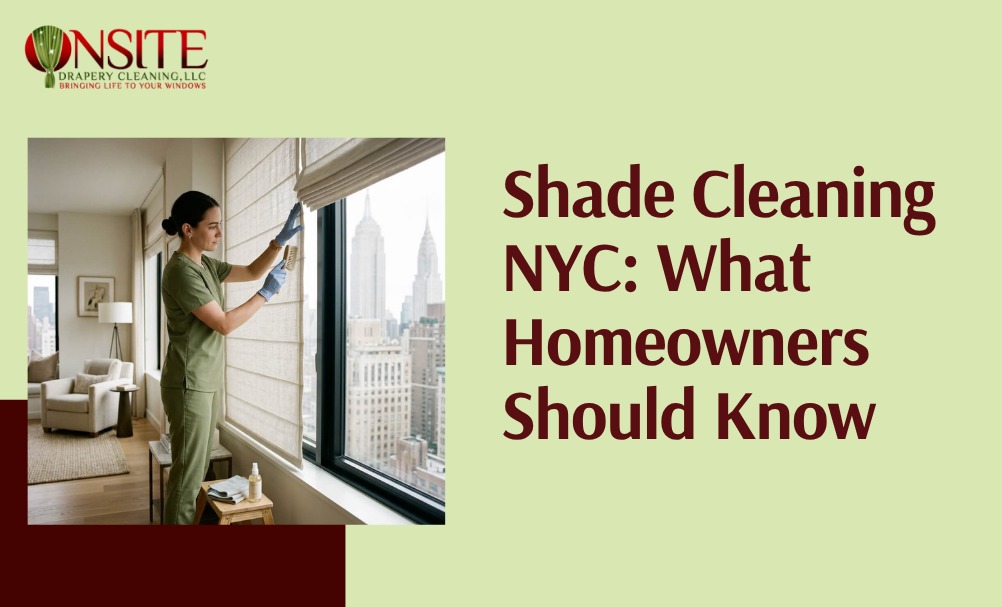
Window shades can trap dirt and dust that many homeowners may not even realize. All it takes to give them a buildup of dirt is for the window to be open and allow street dust and fine particles to enter the room. Nearby construction can add more dust and dirt particles. The room’s buildup can include cooking and other activities, and then add pet hair to the dirty buildup on the shades. Over time, this can make shades look dull and less fresh.
While window shades may seem like simple coverings for a window, there is more than meets the eye in the many different designs that make up a variety of styles of shades. Roman shades have fabric folds. Cellular shades have small honeycomb-like spaces that can collect dust. Silhouette shades have delicate fabrics and sheer layers. Many designs also contain special finishes, cording, adhesives, and motorized features that should be used with care.
Each type of window shade is different and will require a different cleaning method. Too much water, strong cleaning agents, or an overzealous scrub can damage your window shade.
This is the guide for homeowners to learn about shade cleaning NYC. This will explain different types of shades, common mistakes people make when cleaning shades, the method of professional cleaning, and when it is best to hire a cleaning professional to do the job for you.
What Is Professional Shade Cleaning?
Professional shade cleaning is not the same as wiping every shade with the same product. A real professional process begins with inspection, before any moisture or cleaning agent is applied.
A typical professional approach includes:
- Identifying the shade type and construction
- Checking the fabric or material
- Looking for dust, stains, and signs of wear
- Reviewing operating parts, including cords, chains, and motors
- Testing a hidden area when there is any concern about dye stability or finish sensitivity
- Selecting a cleaning method suited to the specific material
- Protecting surrounding walls, furniture, and flooring
- Cleaning carefully with appropriate tools and moisture levels
- Drying the shade fully and evenly
- Completing a final inspection before finishing
This inspection-first process matters because applying the wrong product or too much moisture to the wrong material can cause permanent damage. The method chosen for a coated roller shade should not be the same method used on a lined Roman shade or a Silhouette with delicate fabric vanes.
Why NYC Window Shades Need Regular Cleaning
Living in New York City puts shades under conditions most suburban homes never face. The buildup is real, and it happens faster than most people realize.
Street Dust
Open windows and busy streets bring fine particles indoors regularly. This dust settles on shade surfaces, works into fabric weaves, and accumulates inside cellular honeycomb structures over time.
Nearby Construction
Construction is a constant in many NYC neighborhoods. Fine construction dust travels easily and settles into shade folds and fabric layers, often leaving a gray cast that vacuuming alone will not fully remove.
Cooking in Smaller Spaces
In many New York apartments, kitchens and living areas sit close together. Cooking grease and steam can reach window shades, leaving a residue that attracts more dust and becomes sticky over time.
Heating and Cooling Systems
HVAC systems and radiators keep air moving through rooms. That air movement distributes dust across surfaces, including shades that hang close to vents or baseboard units.
Everyday Use
Frequent raising, lowering, and handling leaves fingerprints, handling marks, and surface buildup along edges and operating mechanisms, even on shades that appear clean from a distance.
Which Types of Window Shades Can Be Professionally Cleaned?
Here is a quick overview before we go deeper:
| Shade Type | Main Cleaning Concern | Professional Care Needed? |
|---|---|---|
| Roman | Fabric folds and lining | Often |
| Roller | Surface and coating | Depends |
| Cellular | Honeycomb structure | Often |
| Silhouette | Delicate sheer vanes | Often |
| Motorized | Fabric + electrical parts | Often |
| Blackout | Coating/backing | Depends |
Roman Shades
Roman shades use fabric panels that fold into horizontal sections when raised. Those folds collect dust along every pleat. Many Roman shades also include a lining, decorative trim, or both, which adds complexity. Incorrect cleaning methods can distort the folds, cause linings to separate, or affect decorative edges. Fabric shade cleaning for Roman styles typically requires a careful, fabric-specific approach.
Roller Shades
Roller shades are made from fabric or synthetic materials that roll around a tube mechanism. Some have coatings or treatments for light filtering or privacy. Surface dust is common, and stains from handling are frequent near the bottom bar. The coating on some roller shades can be sensitive to moisture, so cleaning product selection matters.
Cellular Shades
Cellular shades, sometimes called honeycomb shades, are built from a lightweight pleated fabric with air pockets inside each cell. Those air pockets trap dust that cannot be reached with a standard cloth. The adhesive holding the cells together can also be vulnerable to excess moisture. Cellular shade cleaning requires a controlled, gentle approach that considers the structure from the inside out.
Silhouette Shades
Silhouette shades have fabric vanes suspended between two sheer fabric layers. The vanes are delicate, and both the vanes and sheers can be damaged by rubbing, excess moisture, or harsh products. These shades benefit most from professional handling.
Motorized Shades
Motorized shade cleaning requires attention to two separate concerns: the fabric itself and the motor housing, controls, and wiring. Excess moisture near electrical components can cause damage that goes far beyond the fabric. A professional should understand the construction of the shade before any cleaning method is applied.
Blackout Shades
Blackout shades use a backing or coating to block light. That coating can be sensitive to aggressive cleaning agents, rubbing, or over-wetting. Results vary depending on the specific product and how the backing was applied.
Why Some Shades Need More Care Than Others
Not all shades are built from the same materials, and that difference matters more than most homeowners expect.
Shades may include natural fibers, synthetic fibers, or blends. Some have coatings. Others have adhesives, decorative trim, multiple layers, or motorized operating systems. Each of these elements responds differently to moisture, cleaning agents, and physical handling.
According to professional textile care guidance from the IICRC, natural fiber fabrics including cotton, linen, silk, wool, and rayon are susceptible to color loss, bleeding, texture change, shrinkage, and yellowing if not handled with care by an experienced textile specialist. Blended fabrics that combine natural and synthetic fibers carry similar risks.
This is exactly why inspection matters before any cleaning begins. Identifying the material first is not a formality; it is the step that determines which method is safe to use.
Common Shade Cleaning Mistakes Homeowners Make
DIY shade cleaning is tempting, especially when the issue looks simple. But several common mistakes can turn a minor problem into a permanent one.
- Using too much water — Excess moisture can cause fabric to shrink, warp, or develop water marks as it dries unevenly
- Scrubbing fabric — Rubbing fabric aggressively distorts weaves and damages surface finishes
- Applying strong stain remover — Products designed for carpets or hard surfaces can strip fabric coatings or bleach color
- Using bleach — Even diluted, bleach can cause irreversible color loss on shade fabrics
- Spraying directly onto motorized parts — Moisture near motors, controls, or wiring creates risk of electrical damage
- Pulling or bending delicate pleats — Roman and cellular shade pleats can crease or distort if handled with too much force
- Vacuuming with too much suction — High suction can pull fabric, damage cellular structures, or distort Silhouette vanes
- Using one product for every shade — Different materials require different approaches
- Ignoring manufacturer care instructions — Most shades come with care guidance that homeowners often overlook
- Treating stains without testing first — Applying any product without testing a hidden area first risks visible damage
The results of these mistakes range from water marks and color loss to distorted pleats, adhesive failure, and lasting changes to fabric texture.
For a broader overview of window treatment care, the how to clean blinds and shades guide covers additional material types and maintenance habits.
Professional Shade Cleaning vs. DIY Cleaning
| Factor | DIY Cleaning | Professional Cleaning |
|---|---|---|
| Fabric inspection | Limited | Completed before cleaning |
| Cleaning method | General household method | Selected for material |
| Stain treatment | Basic | Fabric-specific |
| Delicate shades | Higher risk | Specialist care |
| Motorized shades | Easy to over-wet | Components considered |
| Drying | May be uneven | Managed carefully |
| Convenience | Requires homeowner time | Service handled for you |
For basic surface dust on a synthetic roller shade, a careful DIY approach may be enough. For Roman shades, Silhouette shades, cellular shades, motorized systems, or anything custom-made, the risk of DIY damage outweighs the convenience.
How Professional Shade Cleaning Works
Step 1: Inspect the Shade
The cleaner examines the fabric, construction, stains, operating parts, and overall condition before touching anything else.
Step 2: Identify the Material
Determining whether the shade is natural fiber, synthetic, coated, blended, or layered shapes every decision that follows.
Step 3: Check Stains and Problem Areas
Specific spots, dust lines, handling marks, and discoloration are noted so they can be addressed with the right treatment.
Step 4: Test When Needed
If there is any uncertainty about how a dye or finish will respond, the cleaner tests a hidden area first.
Step 5: Select the Cleaning Method
The method is chosen for the specific shade, not applied as a one-size-fits-all solution.
Step 6: Clean Carefully
Controlled tools, appropriate moisture levels, and fabric-specific products are used throughout.
Step 7: Dry and Inspect
The shade is left fully dry and in good operating condition, with a final check before the job is complete.
Can Shades Be Cleaned Without Taking Them Down?
Some shades can be cleaned onsite while still installed, but not every shade qualifies. The decision depends on the material, construction, stains present, condition, whether the shade is motorized, and which cleaning method is needed.
When onsite cleaning is appropriate, the benefits are clear: less handling, no transportation, no reinstallation, and far less disruption to the home.
That said, some shades need to be taken down for proper treatment. A professional should make that call based on what the shade actually requires, not as a default either way.
To learn more about what professional window treatment cleaning includes and whether onsite service applies to your shades, the full service overview covers both residential and specialty options.
How Often Should NYC Homeowners Clean Their Shades?
There is no single schedule that works for every home. Cleaning needs depend on a range of factors:
- How often windows are open
- Whether pets are present
- How much cooking happens near the shades
- Whether nearby construction has occurred recently
- The type and color of the fabric
- How much the room is used daily
- HVAC activity and airflow
- Manufacturer care recommendations
Rather than following a fixed calendar, regular visual inspection is a practical habit. Light dust removal where appropriate can extend time between deeper cleanings. For the full picture on timing and maintenance, the guide on regular shade cleaning explains how to assess when each type of shade needs attention.
When Should You Call a Professional Shade Cleaner?
Some situations are clear indicators that professional help is the right call:
- Stains that have not responded to careful spot treatment
- Shades that look dull, flat, or discolored overall
- Fabric that is delicate, custom-made, or expensive
- Roman, Silhouette, or cellular shades with visible buildup
- Any motorized shade that needs more than light surface dusting
- Shades where the material is unknown or unclear
- Water marks or tide lines from previous cleaning attempts
- Shades with decorative trim, beading, or specialty finishes
- Cases where a DIY attempt has already left a mark
- Shades that have collected heavy dust after nearby renovation work
For homeowners with vertical cellular shades specifically, the how to clean vertical cellular shades guide covers the particular challenges those styles present.
Shade Cleaning NYC for Apartments and High-Rise Homes
Shade cleaning NYC presents some practical challenges that do not come up in most other markets. High-rise apartments often have large windows with custom treatments. Storage space for removed shades is limited. Elevator access adds a logistical step for any shade that needs to be transported. And in luxury buildings, custom window treatments may represent a significant investment worth protecting carefully.
On top of all that, street dust and construction activity are ongoing realities for most NYC residents, making buildup a faster and more persistent problem than in lower-density areas.
Onsite cleaning is particularly well suited to these conditions. No removal, no transportation, no reinstallation. The cleaner comes to the home, inspects the shades where they hang, and completes the work without requiring the homeowner to coordinate removal or storage.
For homeowners with multiple rooms or a combination of shade types, residential window treatment cleaning covers full-home service options.
How to Choose a Shade Cleaning Company in NYC
Before hiring any shade cleaning company, ask the right questions:
- Do you specialize in window treatments specifically?
- Have you cleaned this type of shade before?
- Do you inspect before cleaning?
- Can you handle delicate or natural fiber fabrics?
- Can you clean motorized shades safely?
- Do you test when there is any concern about dye or finish?
- Can shades remain installed, or will they need to be removed?
- How do you protect surrounding walls and furniture during the process?
- Are you fully insured?
- What exactly is included in the estimate?
Watch for these red flags:
- Companies that use one method for every shade type
- Promises of guaranteed stain removal before inspection
- Skipping inspection altogether
- No consideration for motorized components
- Inability to explain their process in clear terms
Why Choose Onsite Drapery Cleaning for Shade Cleaning in NYC?
Onsite Drapery Cleaning brings more than 15 years of hands-on experience to residential shade and window treatment cleaning across New York City and surrounding areas.
Every job begins with an inspection. Fabric type, construction, stains, and operating parts all of it is reviewed before any cleaning method is selected. This approach avoids the shortcuts that lead to damaged fabric, distorted pleats, or problems with motorized components.
The service covers a wide range of shade types, including Roman shades, roller shades, cellular shades, Silhouette shades, motorized shades, and blackout shades. Onsite cleaning is available where appropriate, which means minimal handling and no disruption from removal and reinstallation.
Need professional shade cleaning in NYC? Request an estimate today.
Frequently Asked Questions
Can fabric window shades be professionally cleaned?
Yes, many fabric shades can be professionally cleaned. The correct method depends on the fabric, construction, coating, stains, and condition. A professional should inspect the shade first so the cleaning method does not damage the material, pleats, finish, or operating system.
Can Roman shades be cleaned without removing them?
Some Roman shades may be cleaned while installed, depending on the fabric, lining, stains, and cleaning method required. Onsite cleaning can be convenient, but it is not suitable for every shade. An inspection should be completed before deciding whether removal is necessary.
How do you clean cellular shades?
Cellular shades need gentle care because of their honeycomb shape and lightweight construction. Light dust may sometimes be removed carefully, while deeper soil may need professional attention. Excess moisture or aggressive cleaning can affect the cells, adhesives, or fabric.
Can motorized shades be professionally cleaned?
Yes, many motorized shades can be cleaned professionally. The cleaner should consider both the fabric and the motorized components. Moisture should be controlled carefully around electrical parts, controls, and housings. The exact method depends on the shade design and manufacturer guidance.
How often should window shades be professionally cleaned?
There is no single schedule for every home. Cleaning needs depend on dust levels, pets, cooking, open windows, construction activity, room use, fabric type, and manufacturer recommendations. Regular inspection helps determine when light maintenance is enough and when deeper professional cleaning is needed.
Is professional shade cleaning worth it?
Professional cleaning is particularly valuable for delicate, custom, stained, or expensive shades because the cleaning method is selected for the specific material. It can also protect homeowners from damaging fabric, finishes, pleats, or operating parts with unsuitable DIY products or techniques.
Keep Your Shades Clean Without Taking Unnecessary Risks
Window shades experience a barrage of mess. Shades in NYC carry street grime and dirt buildup, grease spots from cooking, hair and fur from pets, and just about every other kind of mess. Each shade is different, so there are different ways of cleaning each. Some shades are rolled, Silhouette, Roman, blackout, roller, or cellular. Others are motorized.
Though cleaning shades at home seems straightforward, often times people damage shades. This is usually caused by using too much water, very strong cleaners, or becoming overeager to clean. There is actually a lot of science behind each cleaning method based on the material, condition, and design of your shades.
For the last 15 years, Onsite Drapery Cleaning has specialized in the cleaning of all shades in NYC. We offer a professional shade cleaning service that incorporates the careful cleaning of fabrics.
Would you like to give your shades a fresh start? Schedule a professional shade cleaning estimate and provide the care your shades need.
Get Your Free Book Today!

Join Our Newsletter - Get Free Gift
Join our community and never miss a beat!