
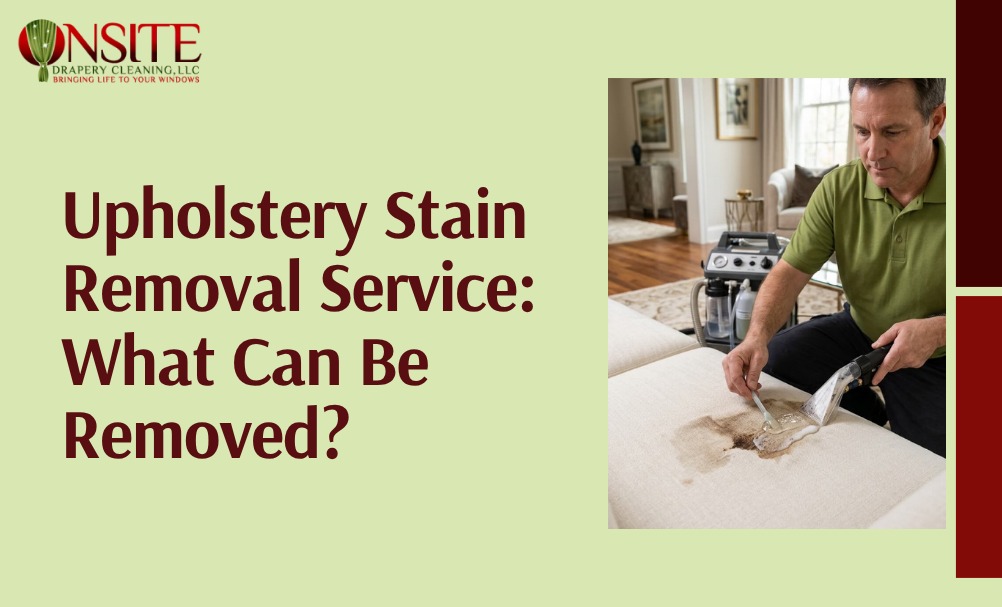
A spilled coffee, a pet accident, a sauce that landed where it shouldn’t have these moments happen. And when they do, the first question most people ask is whether the stain is permanent.
The short answer: it depends. A professional upholstery stain removal service can successfully treat many common stains, from food and beverages to grease, dirt, and pet accidents. But no honest cleaner will promise that every mark will disappear completely. What matters most is understanding three things before any cleaning begins: what caused the stain, what fabric is underneath it, and how long the stain has been there.
Those three questions shape every decision a professional makes and they’ll run as a thread through everything covered in this article. By the time you finish reading, you’ll know which stains professional cleaning can often improve, which ones are more challenging, and when it makes sense to stop guessing and call a professional upholstery cleaning team.
What Is an Upholstery Stain Removal Service?
An upholstery stain removal service involves identifying and treating spots or stains on upholstered furniture using methods selected specifically for the fabric type and contamination involved. It’s not a matter of applying a stronger chemical and hoping for the best.
The process typically follows a structured approach:
- Inspect the upholstery — checking the fabric, construction, existing wear, and any previous damage
- Identify the fabric — cotton, wool, velvet, synthetic blends, and silk all respond differently to cleaning
- Assess the stain — its appearance, location, and spread
- Ask what caused it — and when it happened
- Review previous cleaning attempts — household products already applied can change what’s possible
- Test treatment when needed — a small hidden area may be checked first
- Treat the affected area — using a product and method suited to the fabric and stain
- Clean the upholstery appropriately — treating the stain as part of an overall process rather than in isolation
- Inspect the result — assessing improvement and determining whether further treatment is safe
This careful, methodical approach is what separates professional upholstery cleaning from a quick home attempt with a store-bought product.
What Upholstery Stains Can Professional Cleaning Remove?
This is the question most people arrive with. The answer varies by stain type, fabric, age, and condition but here’s a practical breakdown of the most common categories.
Coffee and Tea Stains
Coffee is one of the most frequent culprits on sofas, dining chairs, office chairs, and hotel seating. Many coffee and tea stains can be improved with professional treatment, but results depend on age, whether the drink contained milk or sugar, the upholstery fabric, and any prior cleaning attempts. The longer a coffee spill sits, the more deeply it can settle into the fibers.
Food Stains
Sauces, chocolate, food oils, and similar residue each behave differently during cleaning. Oil-based food stains may require different treatment than water-based ones. Heavily pigmented sauces can also behave similarly to dye on certain fabrics, which is worth knowing before any attempt is made.
Wine and Beverage Stains
Colored beverages can be particularly challenging on lighter upholstery. Wine contains natural pigments that may affect certain fabrics more aggressively than others. Treatment is often possible, but the fabric type, the age of the stain, and any previous cleaning all influence the outcome.
Grease and Oil Stains
Body oils, cooking grease, cosmetics, and food fats can penetrate upholstery fibers rather than sitting on the surface. These stains may require specialized treatment to draw the substance out without pushing it deeper or causing texture changes.
Pet Stains
Pet accidents, saliva, dirt tracked in from outside, and the general oils that come from regular pet contact can all leave marks and odors on upholstered furniture. Many pet stains can be improved with professional cleaning, though deep contamination is its own challenge covered in more detail below.
Dirt and Mud
Dirt tends to show up on lower areas of furniture, armrests, and frequently used seating. In many cases, dried mud and surface dirt respond well to professional fabric stain removal, particularly when the fabric hasn’t been repeatedly scrubbed or treated beforehand.
Makeup and Cosmetic Stains
Foundation, lipstick, lotions, and hair products often contain a combination of pigments and oils, which means they may need two different types of treatment. Results vary depending on the product involved and the fabric underneath.
Upholstery Stain Removal Guide by Stain Type
The table below offers a quick reference for common furniture stains and what generally affects the cleaning result. Note the deliberate use of “often,” “sometimes,” and “varies” because no reputable upholstery cleaning service should guarantee results before inspecting the fabric.
| Stain Type | Can It Often Be Improved? | What Affects the Result? |
|---|---|---|
| Coffee | Often | Age, fabric, additives |
| Tea | Often | Dye, age, fabric |
| Food | Often | Ingredients and oils |
| Wine | Sometimes | Fabric, color, age |
| Grease | Sometimes | Depth and fabric |
| Pet stains | Sometimes | Age and contamination |
| Mud | Often | Fabric and previous treatment |
| Makeup | Sometimes | Pigments and oils |
| Water marks | Varies | Fabric and cause |
| Ink | Difficult | Ink type and fabric |
Why Are Some Upholstery Stains Harder to Remove?
Stain removal depends on far more than what was spilled. These are the factors that most influence how much professional cleaning can achieve.
Age of the Stain
Older stains have had more time to bond with the fibers. A fresh spill and a six-month-old mark on the same fabric may respond very differently to the same treatment.
Fabric Type
Cotton, wool, silk, velvet, linen, synthetic fibers, and blends each react differently to both stains and cleaning solutions. A product that works well on a polyester blend could damage a silk cushion. Identifying the fabric correctly before any treatment is non-negotiable.
Heat Exposure
Prior heat from dryers, steam irons, or even direct sunlight can set certain stains more deeply into fabric, making them significantly harder to treat.
Previous DIY Cleaning
Household products, particularly those not designed for upholstery, can change the chemical nature of a stain, spread it, or create a secondary mark. This often makes professional treatment more difficult than if nothing had been applied at all.
Dye or Color Loss
This is an important point that often surprises homeowners: sometimes what appears to be a stain is actually permanent color loss or fiber damage. Cleaning cannot restore dye that has been removed. A professional assessment can determine the difference between a removable stain and irreversible fabric damage.
Fresh Stains vs. Old Stains: Does Timing Matter?
Early attention can expand the treatment options available for some spills. A fresh stain has had less time to penetrate and bond with the fibers, which generally gives a cleaner more to work with.
That said, timing is one factor among several, not a guarantee. Quick action helps, but it doesn’t automatically mean complete removal.
For fresh liquid spills, gently blotting (not rubbing) with a clean, dry cloth may help absorb the substance before it sets further. For valuable or delicate upholstery, the safest step is to contact a professional before applying any chemicals.
Old stains, dried stains, previously treated stains, and unknown stains are all still worth a professional assessment. Results may be more limited, but improvement is often still possible, especially with the right technique applied to the right fabric.
Why DIY Upholstery Stain Removal Can Make Things Worse
Many people reach for a household cleaner or search online for a home remedy before considering professional help. The impulse makes sense, but the risks are real—particularly with unknown or delicate upholstery.
Common DIY mistakes include scrubbing aggressively, applying too much water, using bleach, mixing cleaning products, over-wetting the fabric, applying heat, and following generic online advice without knowing the fabric type.
The problems that can result from these approaches include:
- Water rings and tide marks
- Color loss or dye bleeding
- Texture changes in the fabric
- A larger visible spot than the original stain
- Cleaning residue that attracts more dirt over time
- Fabric distortion or shrinkage
The point isn’t that every DIY method is dangerous it’s that unknown or delicate fabrics deserve extra caution. The cost of fixing a stain that’s been made worse by an inappropriate product is often higher than a professional cleaning would have been in the first place.
How Professionals Identify and Treat Upholstery Stains
Understanding the professional process can help set realistic expectations before you book a furniture cleaning service.
Step 1 — Inspect the Furniture: A professional will examine the fabric, construction, visible wear, fading, and any existing damage before making any recommendations.
Step 2 — Identify the Stain: Questions about what caused the mark and when it happened are essential—not just routine conversation. The answers directly inform what treatment is appropriate.
Step 3 — Review Previous Cleaning: Products already applied to the stain can change what’s chemically present on the fabric and which treatments are now safe to use.
Step 4 — Test When Necessary: Before broader treatment, a small hidden area of the upholstery may be tested to check how the fabric responds.
Step 5 — Select the Treatment: The combination of fabric type and stain type determines which product and method is used. There’s no single solution that works for everything.
Step 6 — Clean the Upholstery: The stain is treated as part of an appropriate overall cleaning process rather than in isolation, which produces more consistent results across the piece.
Step 7 — Final Inspection: The professional assesses how much the stain has improved and determines whether additional treatment would be safe or likely to cause harm.
Can Pet Stains and Odors Be Removed From Upholstery?
Pet stains, including urine, saliva, dirt, and the oils left from regular contact, can often be improved with professional treatment. Odor removal, however, is a more complex challenge.
Contamination from pet accidents doesn’t always stay at the fabric surface. It can migrate downward into the padding, foam, or filling beneath the upholstery. When that happens, surface cleaning alone may not resolve the odor or the deeper stain. A professional should inspect the furniture and assess how far the contamination has spread before recommending an approach.
Results vary, and complete odor elimination cannot always be guaranteed, particularly when foam or padding has been heavily saturated over time.
Can Water Stains Be Removed From Upholstery?
Water rings and tide marks confuse many homeowners because they appear without an obvious spill. These marks can result from minerals in tap water, uneven drying, previous cleaning attempts, fabric movement, dye changes, or residue left by other products.
Whether a water mark is removable depends on its cause. Some water marks are simply residue or mineral deposits sitting on the surface those may respond well to professional treatment. Others may reflect a permanent change to the fabric’s dye or fiber structure. Professional inspection helps determine which situation you’re dealing with before any treatment is attempted.
Delicate and Luxury Upholstery Needs Special Care
Silk, velvet, wool, linen, cashmere, designer textiles, and custom furniture all require a different approach than standard upholstery fabrics. With these materials, the priority shifts: protecting the textile may matter more than aggressively pursuing a small stain.
An experienced professional may sometimes decide that further treatment carries more risk than the potential improvement is worth. That judgment knowing when to stop is itself a mark of genuine expertise. For high-value or irreplaceable pieces, working with a cleaner who understands luxury fabrics is essential.
Residential vs. Commercial Upholstery Stain Removal
Professional upholstery cleaning services serve both residential and commercial clients, and the needs differ meaningfully between the two.
Residential furniture includes sofas, dining chairs, armchairs, benches, ottomans, and headboards. These pieces often hold significant personal or monetary value and may be used daily by families with children or pets.
Commercial furniture covers office chairs, reception sofas, restaurant booths, hotel seating, waiting room furniture, and retail store pieces. In commercial settings, upholstery tends to see heavier use, which accelerates soiling and increases the frequency of stain-related issues. Commercial upholstery cleaning often needs to be scheduled around business hours and completed with minimal disruption.
Upholstery Stain Removal Service in NYC
For NYC residents and businesses, onsite upholstery stain removal service offers a practical advantage: the cleaner comes to you. Large, heavy, or valuable furniture doesn’t need to be moved, transported, or left exposed to potential damage in transit.
Onsite professional upholstery cleaning in NYC serves apartments, luxury residences, offices, hotels, restaurants, and retail spaces across the city. High-use environments hotel lobbies, busy restaurant booths, open-plan office spaces benefit particularly from regular professional attention, since soiling compounds quickly with heavy traffic.
Should You Clean or Replace Stained Furniture?
This is a question worth asking honestly before committing to either option.
Cleaning may make more sense when:
- The furniture is structurally sound
- You value the piece aesthetically or sentimentally
- The upholstery is made from a quality or expensive fabric
- Staining is the main issue, not structural wear
- The furniture was custom-made or is difficult to replace
Replacement or reupholstery may be worth considering when:
- The fabric has significant tears or heavy fiber damage
- Color loss is extensive across a large area
- The foam or padding is deeply and permanently contaminated
- The furniture has underlying structural damage
Professional cleaning doesn’t always save money compared to replacement but for well-made furniture where the stain is the only real problem, it often does. A professional assessment can help you make an informed decision rather than guessing.
How to Choose an Upholstery Stain Removal Company
Before hiring any upholstery cleaning service, it’s worth asking the right questions:
- Do you inspect the fabric before recommending a treatment?
- Have you worked with this type of upholstery before?
- Do you ask what caused the stain?
- Do you test treatments on delicate fabrics?
- What results can I realistically expect?
- Can you identify the difference between a stain and permanent fabric damage?
- Do you provide onsite cleaning?
- Are you fully insured?
- What does your estimate include?
- Can you show examples of similar work?
Watch for these red flags:
- Guaranteeing every stain will be removed
- Not inspecting the fabric before quoting
- Using one product for all fabric types
- Promising “like new” results without qualification
- Ignoring previous damage or existing wear
- Being unable to explain their cleaning process clearly
For more guidance on evaluating your options, this professional upholstery cleaning guide walks through what to look for in a qualified provider.
Why Choose Onsite Drapery Cleaning for Upholstery Stain Removal?
Onsite Drapery Cleaning brings more than 15 years of hands-on textile experience to every job. The team provides professional onsite service for both residential upholstery cleaning and commercial upholstery care across NYC and the surrounding areas.
Every service begins with a careful evaluation, fabric identification, stain assessment, and an honest conversation about what treatment can realistically achieve. The team has extensive experience working with delicate textiles, including silk, velvet, and luxury designer fabrics where the stakes are higher and the approach must be more precise.
What Onsite Drapery Cleaning doesn’t do is make blanket promises. Every stain is different. Every fabric is different. What’s offered instead is a thorough assessment, fabric-specific treatment, and a clear explanation of what the process involves aligned with professional upholstery and fabric cleaning guidance from the IICRC (the Institute of Inspection, Cleaning and Restoration Certification), the leading certification body for textile cleaning professionals.
Frequently Asked Questions
Can professional upholstery cleaning remove old stains?
Some old stains can improve with professional cleaning, but results depend on the stain type, fabric, age, and any previous treatments already applied. Over time, some substances may permanently change the fabric or dye structure. A professional should inspect the area first and give an honest assessment of what can safely be attempted.
Can coffee stains be removed from a sofa?
Many coffee stains can be treated professionally with good results. How much improvement is possible depends on how long the spill has been there, whether it contained milk or sugar, the upholstery fabric, and what products have already been used on it. Avoid aggressive scrubbing it can spread the stain or damage the fabric surface.
Can wine stains be removed from upholstery?
Professional treatment may improve or significantly reduce wine stains, but complete removal cannot be guaranteed. Wine contains pigments that react with certain fabrics. The stain’s age, fabric type, dye stability, and previous cleaning attempts all affect the final outcome.
Can pet stains be removed from upholstered furniture?
Many pet stains can be improved with professional cleaning. However, deep contamination may have penetrated into padding or foam beneath the upholstery fabric. A professional should inspect the furniture to understand how far the problem has spread before recommending an appropriate approach.
Can water stains be removed from upholstery?
Sometimes. A water mark may come from minerals, residue, uneven drying, or a change in the fabric itself. Professional inspection can help identify the cause. If the mark reflects permanent dye or fiber damage rather than surface residue, cleaning may not fully remove it.
Should I try removing an upholstery stain myself?
For simple spills on washable fabrics with clear manufacturer care instructions, careful blotting may be appropriate. For valuable, delicate, or unknown fabrics, proceed with caution. Using the wrong chemical, too much moisture, heat, or aggressive scrubbing can make the stain significantly harder to treat professionally and may cause damage that can’t be reversed.
Don’t Give Up on Stained Upholstery Too Quickly
A visible stain doesn’t necessarily mean a piece of furniture needs to go. Professional upholstery stain removal service can help improve many stains caused by drinks, food, dirt, pets, grease, and everyday use often with results that make a meaningful difference to how the furniture looks and feels.
What determines the outcome, every time, is the fabric, the stain type, the age of the mark, any previous cleaning, and the condition of the upholstery overall. That’s why the process always starts with an honest assessment rather than a blanket promise.
If you have a stubborn furniture stain and aren’t sure what’s possible, the best next step is a professional evaluation.
Request a professional upholstery cleaning estimate from Onsite Drapery Cleaning
Get Your Free Book Today!

Join Our Newsletter - Get Free Gift
Join our community and never miss a beat!