
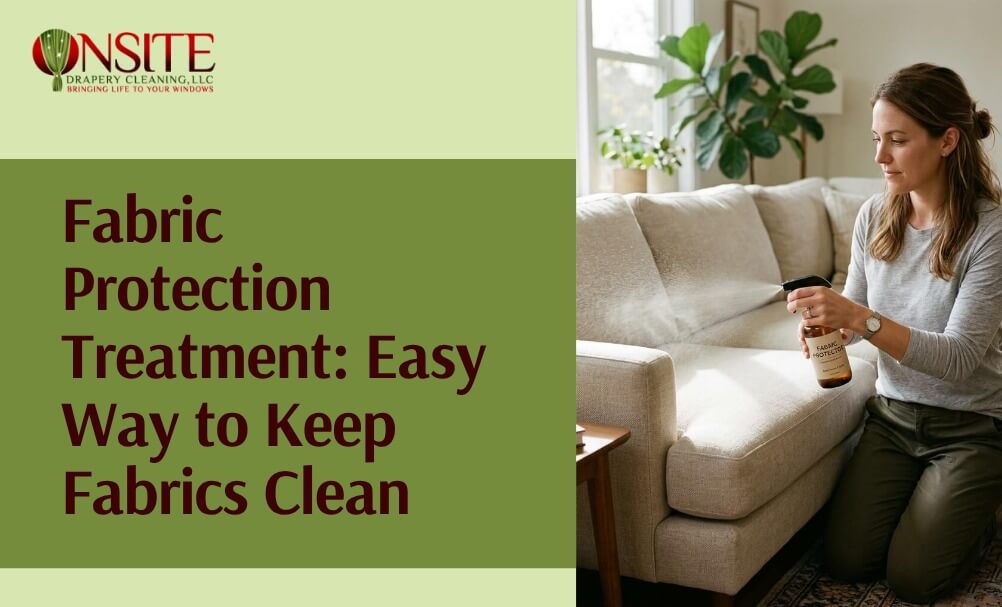
Fabrics around the home get dirty faster than most people realize. Simple things such as coffee spills, dust coming in through windows, and regular use slowly wear them down. Always someone sits on a sofa or touches a curtain, small amounts of dirt, oils, and allergens settle into the material.
Applying a fabric protection treatment is a proactive defense against daily wear and tear which ruins your favorite pieces. A specialized coating acts as an invisible shield, stopping liquids from soaking into material and preventing dirt from settling deep into the threads.
Using a good fabric protection service can make everyday maintenance much easier. It helps reduce the stress of constant cleaning and can also help your furniture and fabrics stay in better condition for longer.
What Is Fabric Protection Treatment?
Fabric protection works by adding a protective layer over the material of your furniture and textiles. The treatment is clear and doesn’t leave behind any noticeable smell, but it helps keep dirt and spills from soaking into the fabric right away. Instead of immediately absorbing into the material, liquids stay closer to the surface, giving you more time to clean them up before they leave a stain.
This simple mechanism keeps fabrics cleaner longer. Routine vacuuming and light dusting become much more effective because the dirt remains on the surface. To achieve the best possible results, experts recommend having a professional fabric protection service apply a fabric stain guard treatment immediately after a deep clean. For example, many homeowners combine protection with professional drapery cleaning for better long-term care and lasting freshness.
What Are the Benefits of Using Fabric Protection?
Adding fabric protection to upholstery comes with benefits beyond just keeping furniture looking nice. One of the biggest advantages is that it helps stop spills from turning into permanent stains. In many cases, a quick cleanup is enough to prevent the spill from leaving a lasting mark.
It also helps make everyday cleaning a lot simpler. Dust, lint, and pet hair are less likely to stick to the fabric, which means vacuuming takes less effort and works better. Fabric protection can also help furniture stay in good shape for longer. When dirt gets worked deep into the material, it slowly wears down the fibers with regular use. Keeping that dirt from settling in too deeply helps reduce damage and keeps the fabric looking better over time.
Fabric protection also helps furniture keep its fresh look for longer. It can slow down fading and help the material hold onto its original texture and color. Another benefit is that it helps reduce odors by stopping sweat, food spills, and pet accidents from soaking deep into the cushions. Keeping fabrics cleaner overall can also help improve the air quality inside your home.
Who Should Use Fabric Protection Treatment?
Virtually every home and business can benefit from a high-quality fabric protection treatment. Families with kids know exactly how fast accidents happen. Sticky fingers, dropped snacks, and spilled juice are everyday occurrences. A sofa fabric protection service provides parents with peace of mind, knowing that a simple accident will not ruin an expensive couch.
These treatments are especially useful for pet owners. Dogs and cats can track in dirt, leave behind hair, and create messes that quickly end up on sofas and chairs. People who own high-end furniture also rely on fabric protection to help care for delicate materials like velvet or silk and keep them looking their best for longer.
Restaurants and offices rely on these treatments to maintain a clean, professional appearance despite heavy daily traffic. Furthermore, allergy-sensitive homes benefit greatly. Because the treatment stops dust and pollen from embedding in the fibers, it helps create a healthier living space. Regular upholstery cleaning services and fabric protection help maintain furniture quality and improve indoor hygiene. To learn more about creating a healthier home environment, you can also review guidelines at cdc.gov.
What Products Should Fabric Protection Be Applied To?
You can apply fabric protection for upholstery to a wide variety of items around your home. Sofas are the most common candidates, as they receive the highest volume of daily use. Dining chairs, which sit right in the spill zone, also require strong defense.
Do not overlook your window treatments. Adding drapery fabric protection ensures that your curtains and drapes resist dust, pollen, and sunlight damage. Fabric headboards, decorative pillows, and cozy accent chairs also benefit from a protective layer. In commercial settings, office seating requires treatment to handle the constant use from employees and clients.
Protecting window fabrics after shade cleaning services helps maintain freshness longer, ensuring your entire room looks spotless and well-maintained.
How Often Should Fabric Protection Treatment Be Applied?
A common question is how you need to schedule a fabric protection treatment. For the average household, experts recommend reapplying the coating every 12 to 24 months. The protective barrier slowly wears off over time due to friction from sitting, rubbing, and general use.
It’s a good idea to apply fabric protection after a professional deep cleaning. Cleaning removes built-up dirt and stains, but it can also remove any protection that was already on the fabric. Furniture that gets used often, like family room sofas or office chairs, may need extra attention to stay protected. Many homeowners choose to add fabric protection after a full home cleaning so their furniture and fabrics are cared for at the same time.
DIY vs Professional Fabric Protection Service
Many people consider buying a spray can from the store to protect their furniture. But, DIY limitations quickly become apparent. Store-bought sprays even give uneven coverage. You may spray too much in one spot, leaving the fabric stiff, while missing other areas completely.
A professional fabric protection service may help make sure the treatment is applied evenly and properly across the material. Experienced technicians know how different fabrics react and use methods that won’t damage the texture or change the color of your furniture. Many services also offer safer, eco-friendly options that help protect fabrics without filling your home with strong chemical smells, making them a better choice for families and pets.
How Fabric Protection Helps with Daily Cleaning
Daily chores take less time when you have a stain protection treatment in place. Easier maintenance is the most immediate benefit. When you vacuum the couch, pet hair and dust lift away effortlessly.
Faster spill cleanup means less stress during family dinners or parties. If someone drops a meatball or spills a glass of wine, you have a window of time to blot the liquid before it sets. This results in less deep staining and fewer permanent marks. Before and after protection examples clearly show the difference: untreated fabric absorbs liquid instantly, while treated fabric causes the liquid to pool on the surface, waiting for a paper towel.
Related Fabric Care Guides
Keeping your home clean takes regular care, especially when it comes to fabrics and furnishings. If you’d like to learn more about caring for your upholstery, curtains, and other textiles, there are plenty of helpful resources available.
You can explore detailed guides on upholstery cleaning to learn better ways to keep sofas and chairs fresh and well-maintained. There are also practical drapery care tips that help curtains stay clean and looking their best.
Frequently Asked Questions
Is a fabric protection treatment worth it?
Yes. It saves you money in the long run by preventing permanent stains and extending the life of your furniture and curtains.
Does it change fabric texture?
No. A professionally applied fabric protection treatment is completely invisible and odorless. It does not make the fabric feel stiff, sticky, or rough.
Is it safe for kids and pets?
Absolutely. Once the fabric protection treatment has fully dried, it is completely safe for children and animals to sit, lay, and play on the furniture.
How long does a fabric protection treatment last?
Typically, the protection lasts between 12 and 24 months, depending on how often the furniture is used.
Can it protect against all stains?
While a fabric protection treatment provides a highly effective barrier against most water- and oil-based spills, no treatment is 100% stain-proof. It gives you the necessary time to wipe up the spill before it becomes a permanent stain.
The Bottom Line
Choosing the right fabric protection treatment is one of the easiest ways to keep your furniture, curtains, and upholstery cleaner for longer. A proactive approach stops dirt from building up and stops accidents from turning into costly replacements.
Onsite Drapery Cleaning, LLC gives trusted cleaning and fabric protection solutions designed to help protect your investment and maintain a fresh, healthy home. Our professional fabric protection service guarantees a safe, even application that preserves the beauty of your textiles.